
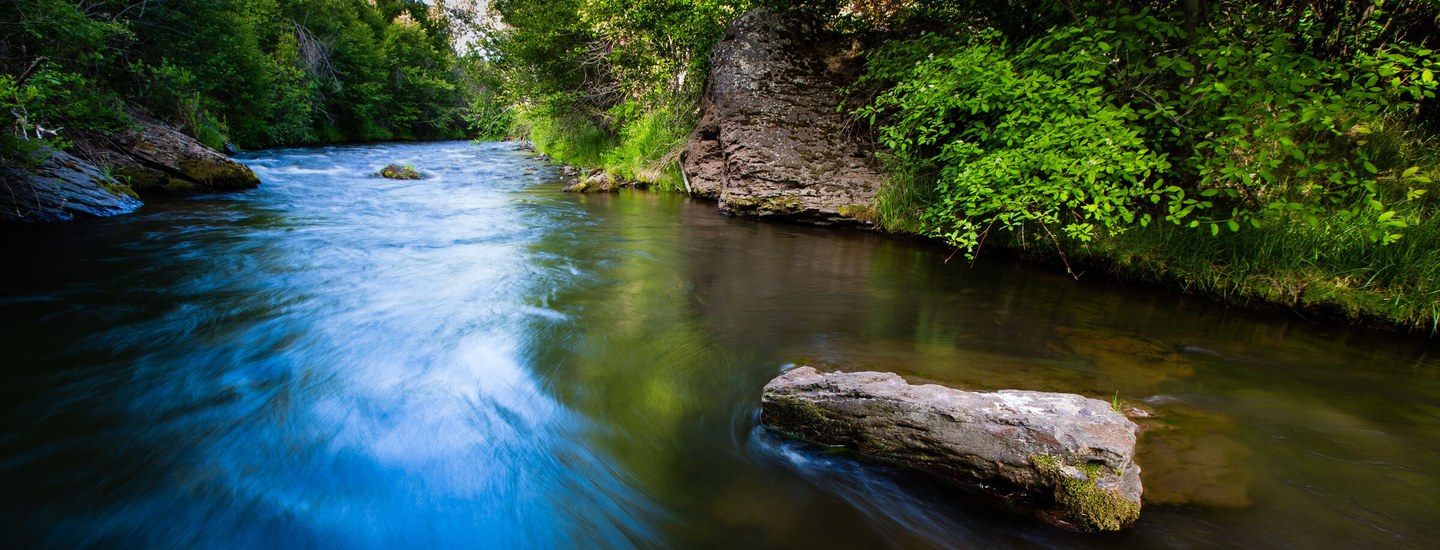
The history of the Pacific Northwest in the past 100+ years tells a story of population growth, fish, economic progress, rivers flowing from glaciers, and dams. In preparation for the Land Trust’s March 11th Nature Night about the Klamath Dam removal and restoration project, we’re looking at other Pacific Northwest rivers where dams have been removed and what restoration work has taken place in the years since.
All of the rivers and dams below share common themes—population and economic growth created a need for dams, native fish suffered while dams were in place, the Endangered Species Act played a part in dam removal, and recovery efforts will take years, even generations.
The Sandy River in Oregon begins on Mt Hood before descending 56 stream miles to the Columbia River. Ancestors of Columbia Basin Tribes have traditionally lived, hunted, and gathered in this area—represented today by the Confederated Tribes of Grand Ronde, the Confederated Tribes of Warm Springs, and Chinookan peoples.
The Bull Run Hydropower Project was created in the early 1900s to bring electricity to Portland. In 1913, crews built the Marmot Dam to support this effort. Fish populations declined as the river lost more and more of its complexity for nearly a hundred years.
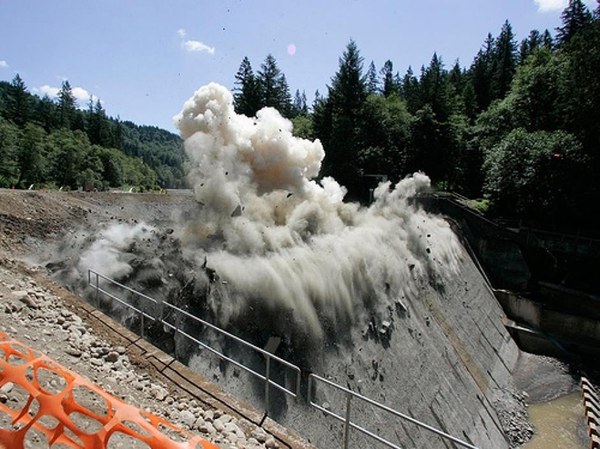
As fish throughout the Pacific Northwest were listed as threatened through the Endangered Species Act (ESA) in the late 1990s, it became more cost-effective to remove the Marmot Dam than to upgrade it for relicensing. The relicensing process includes complying with the ESA and its prohibition of harming listed endangered species. In 2007, Portland General Electric detonated explosives to remove the face of the Marmot Dam. Crews removed the Little Sandy dam the following year.
Restoration along and in the Sandy River is extensive and ongoing. Habitat restoration and river complexity are a large focus, including the addition of woody debris, adding deep pools, increasing off-channel habitat, and creating the conditions for spawning-sized gravels. Restoration of streamside forests is improving water quality, keeping stream temperatures cool, and supporting food webs. In addition, invasive weed removal around the river is a focus.
Following dam removal and restoration work, fish returns for Chinook, coho salmon, and steelhead have increased significantly. Fish returns still vary from year to year, influenced by a variety of factors like ocean conditions, climate patterns, and water temperatures.
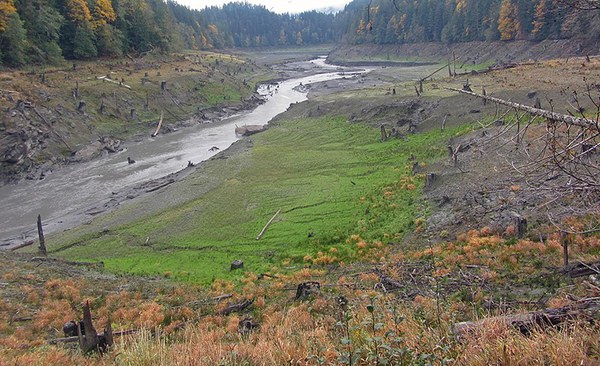
Starting in the Olympic mountains of Washington, the Elwha River winds its way to the Strait of Juan de Fuca. Along the way, the river moves through areas traditionally inhabited by the Lower Elwha Klallam tribe. The river supports ten different fish runs, including all five species of Pacific salmon found in North America (Chinook, coho, chum, sockeye, and pink).
Hydroelectricity for logging and local economic growth drove construction of the Elwha Dam (constructed from 1910-1912) and the Glines Canyon Dam (constructed in 1927). Together, the dams blocked more than 70 miles of fish spawning habitat for nearly a century.
Starting in 2011, crews began removing the Elwha Dam and Glines Canyon Dam, with completion in 2012 and 2014, respectively. Both dams were slowly deconstructed.
Fish began returning upstream within months! Chinook returns have been the most successful, while steelhead also have strong recovery rates. Meanwhile, Chinook and coho salmon have the widest distribution within the Elwha River.
After removal, sediment that had accumulated behind the dams moved downstream. Sediment continues to reshape the river mouth delta and estuary. In addition, native plant restoration is a critical priority to minimize invasive weeds, restore natural systems, and re-establish the surrounding forests. Not only does this restoration work create habitat for birds and other wildlife, but it also provides food for pollinators, improves the soil quality, and prevents erosion.
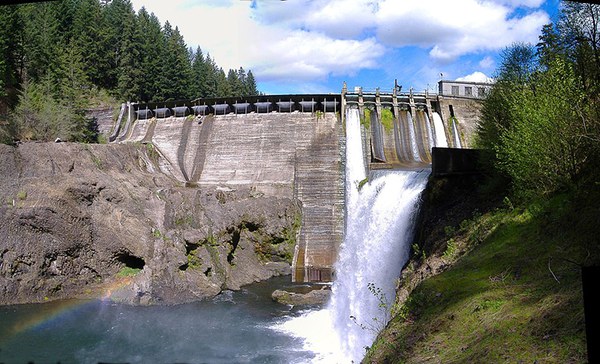
Washington's White Salmon River flows from Mt Adams to the Columbia River. Tribes and bands that make up the Yakama Nation have connected to the river since time immemorial.
In 1912, the Condit Dam was constructed to power a paper mill and supply electricity to nearby towns. Although a wooden fish ladder was installed at the same time as the dam, floods washed it away within years.
When the owner of Condit Dam, PacifiCorp, realized it would be too expensive to meet updated environmental codes, the dam was slated for decommissioning. At the time, it was the largest dam removal in the US. In 2011, crews used explosives to create a hole in the dam, with water and sediment tearing through the dam and continuing downriver.
Coho salmon, Chinook, steelhead, and Pacific lamprey have since begun recovering in the river, with returns similar to nearby rivers.
Restoration along the White Salmon River has progressed gradually. Northwestern Lake, a former reservoir, left behind soil high in sulphur and iron. Restoration teams amended the soil with mulch from local trees and added mycorrhizal fungus to increase organic matter before planting thousands of native plants. In other areas, the Yakama Nation planted 34 varieties of culturally significant plants. Over time, additional shrubs and wildflowers have naturally moved into these spaces.
It is encouraging to see nature rebound after dam removals, whether it’s slow and steady progress or an abrupt change. As these rivers and their surrounding areas continue to heal over decades, we look forward to watching their progress.
In the meantime, we hope you’ll join us via livestream or add yourself to the waitlist for in-person attendance at our March 11, 2026 Nature Night: The Water Remembers with Amy Bowers Cordalis. It will be an inspiring exploration of the Klamath Dam removal and restoration project, and how Indigenous rights, cultural values, and ecosystem restoration can reshape policy and deliver climate solutions. We hope you’ll join us!
Sources:
- Ten years after Oregon's largest dam removal, salmon and steelhead rebounding on the Sandy, Oregon Department of Fish and Wildlife
- State of the Sandy, Sandy River Basin Watershed Council
- Elwha River Restoration, National Park Service
- River Restoration, Lower Elwha Klallum Tribe
- Elwha River transformed 10 years after dam removal, OPB
- White Salmon River celebration: 11 years after dam removal the river recovers, Yakama Nation Fisheries
- Success of White Salmon River restoration a blueprint for other Northwest dams, The Columbian
- Removing Condit Dam spurred hopes, but it also begged questions the White Salmon River is slowly answering, OPB
Learn more: