
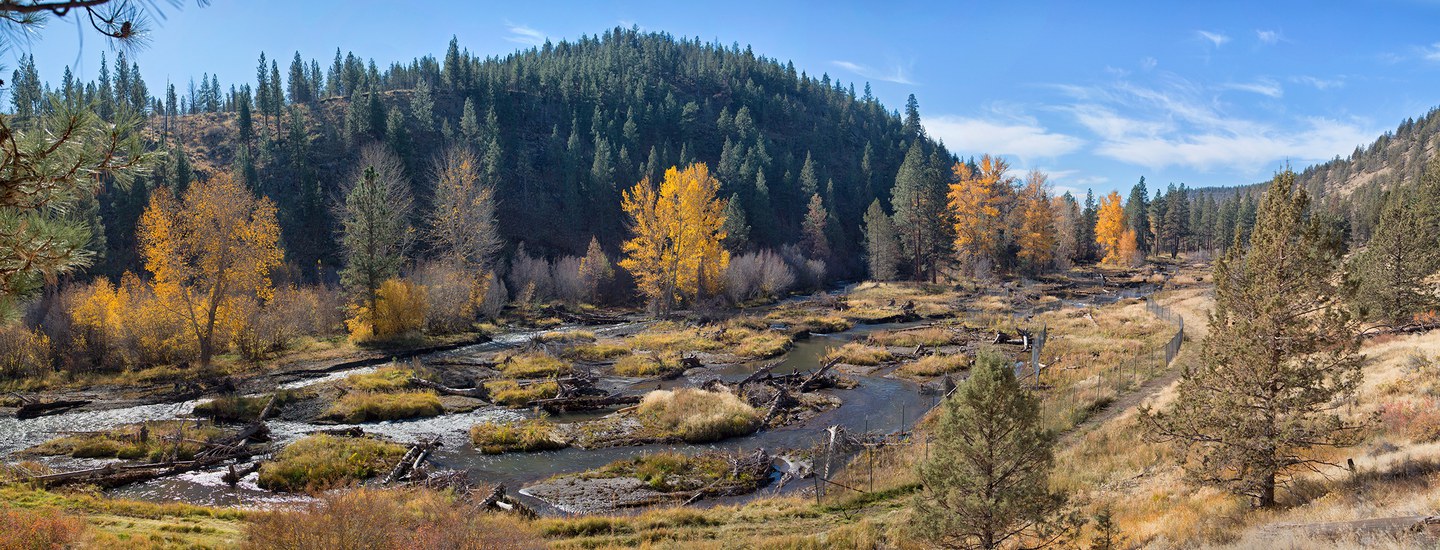
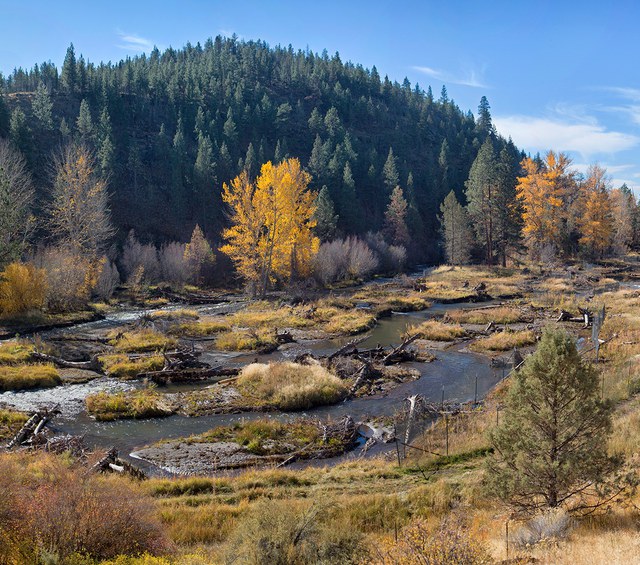
Carbon storage is a hot topic in the era of climate change. It's considered a natural climate solution that can help reduce carbon dioxide, a key greenhouse gas, and mitigate the impacts of climate change. In fact, a recent study by researchers in Oregon found that one potentially effective action to increase carbon storage in natural areas is through streamside revegetation.
Streamside revegetation involves planting native trees and woody shrubs along streams and rivers as a means to store carbon. How? All plants make their own food through a process called photosynthesis that involves taking carbon dioxide out of air to make the energy they need to survive. So trees and shrubs help mitigate climate change by actively removing CO2 from the atmosphere. Even when plants die and decompose, they continue to store a massive amount of CO2 in soil.
To understand the effectiveness of this type of natural climate solution on Land Trust protected lands, we are currently partnering with researchers from Oregon State University, Colorado State University, and Trout Unlimited on a studies. The goal is to quantify carbon storage in floodplain soils and streamside areas at restoration sites along Whychus Creek. Learn more about these efforts at Whychus Canyon Preserve, through this interactive story map developed by intern Olivia Colton and Land Trust staff.
Learn more:
- About streamside carbon storage at Whychus Canyon Preserve
- About the Whychus Creek Restoration
- About carbon storage at the Metolius Preserve