
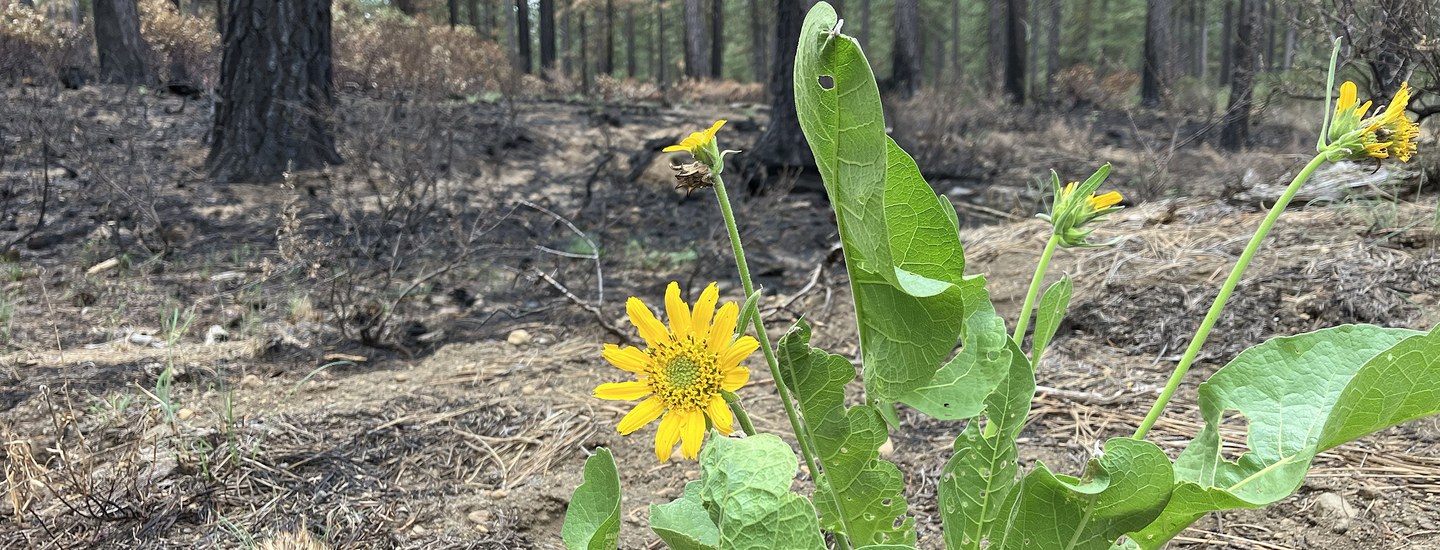
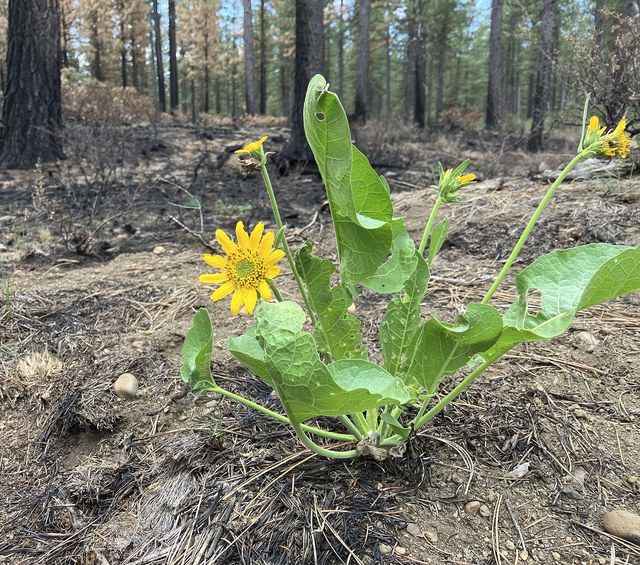
As spring progresses, you might be wondering how wildflowers at Land Trust Preserves might recover after the Flat Fire in 2025. Recovery of wildflowers after fire is a tricky business. While most are adapted to the historical fire regimes with which they evolved, many natural systems do not function as they did historically. For example, a long history of fire suppression may have led to unnatural fuel accumulations, more severe fires, and higher mortality. Climate change, including more frequent or extended drought, may threaten the persistence and resilience of native species in their historic range.
There are also immediate fire impacts that can impact recovery. Invasive species, like cheatgrass, can rapidly take control of a burned or disturbed site, and may impair recovery of natives. Soil moisture in the seasons after the burn may affect both recovery, and plant competition. On the plus side, burning helps release nutrients from the organic matter and leaf litter in the surface soils. This may benefit both native and non-native invasive species.
How a fire affects the plant itself may also depend on its resistance to burning and tolerance of fire. Fire-resistant plants are species that do not readily ignite; perhaps due to having high moisture and low volatile oil content. Fire-tolerant plants may burn but possess adaptations like thick bark or resprouting abilities that help them to survive fire. Both of these adaptations improve landscape or habitat survival and recovery after a fire.
So, what will happen to some of the wildflowers at our Preserves? Time will tell, but we can look at past research to see what might happen. Luckily, the US Forest Service and others study this exact topic and maintain databases of information on the effects fire has on plants. Land Trust volunteer and retired forest ecologist, Pat Green, spent some time digging into the data to help us understand how our favorite wildflowers might recover this spring. (And, yes, Whychus Canyon Preserve, is still closed to all use after the fire, so please do not go looking for flowers there. Thank you!)
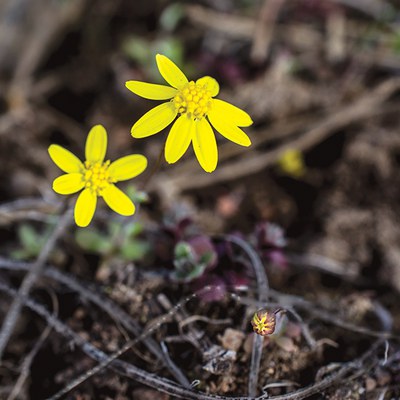
Early spring annual with tiny yellow blooms. Most commonly grows in dry open areas of low leaf litter and competing vegetation.
Goldfields would have completed their life cycle before the Flat Fire occurred in August 2025. If fire severity in their habitat is minimal, persistence of viable seed is hypothesized to be good for the next season. Competing invasive grasses may be a threat here. Watch this one to see how it recovers.
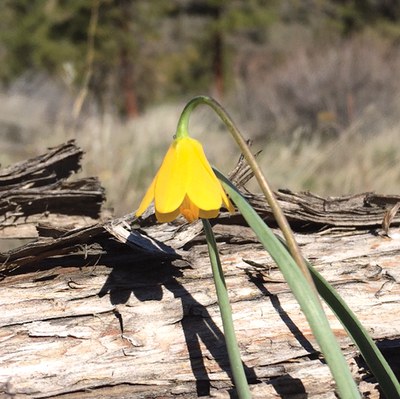
Early spring blooming perennial with an underground corm or stem that stores nutrients. Bright yellow bell-shaped flower, it grows in dry, open areas of low leaf litter accumulation.
One study in shrub-steppe habitats documented significant increases in frequency and cover of yellow bells over the four years following a wildfire. It is thought the substantial underground storage parts contributed to this recovery (Wilderman, Washington NDR)
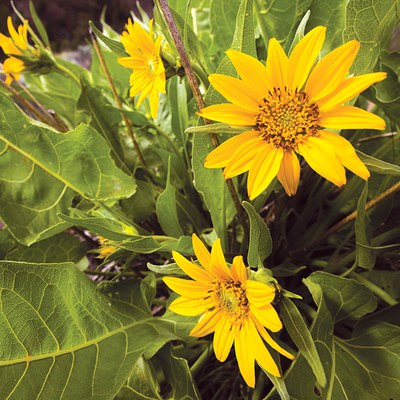
Spring blooming, tap-rooted perennial with large yellow flower. Roots may be large and grow 3-5 feet down.
Balsamroot may be top-killed by fire, but its strong and persistent taproot allows it to regenerate from the root base following most fires. Many of the habitats where the species occurs benefit from occasional fire, and balsamroot may also benefit and increase following moderate fire. Balsamroot is thought to be a prolific seed producer after fire. The Flat Fire was late August so the plants would have been dormant at the time of the fire. We expect good recovery and seed production over the next two years.
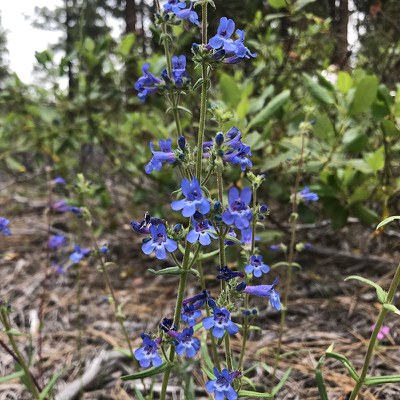
Spring and early summer perennial with electric blue flowers on central stalks.
Lowly penstemon are not tolerant of fire, but are fire resistant due to leaves that stay green with relatively high moisture content during the fire season (NRCS). Studies on other penstemon species suggest that in areas of historically frequent fire, such as Central Oregon, smoke may stimulate seed production. Watch this one to see how it recovers.
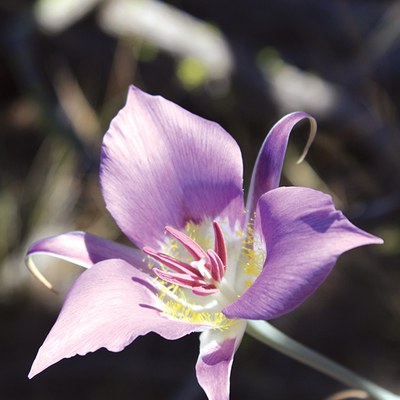
Large summer blooming perennial with grass-like leaves and violet flowers.
At Whychus Canyon Preserve, mariposa lilies typically occur in open juniper stands or bunchgrass-wildflower communities. This species is considered imperiled in Oregon, Washington, and Idaho (NatureServe). The Natural Resource Conservation Service database indicates it has low fire resistance and medium fire tolerance, and no resprouting ability. At the time of the Flat Fire, the mariposa lilies may have been completing their bloom and seed set, and may have been vulnerable to fire mortality. However, one study in shrub-steppe habitats documented significant increases in frequency and cover over four years after wildfire. It is thought the substantial underground storage parts contributed to this recovery (Wilderman, Washington NDR). One to watch for and protect.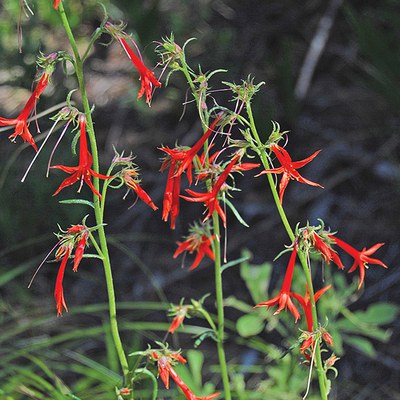
Scarlet gilia usually grows as a rosette its first year, and elongates and blooms its second year, then dies. Bright red flowers.
At Whychus Canyon Preserve, scarlet gilia occurs most often on open gravelly and sandy stream bars and low terraces. A 1992 study in Oecologia found that fire often caused the plant to die at the top and branch at the base, so its life cycle would be lengthened until the new growth elongated and bloomed. These new stalks sometimes died. Fire appeared to increase seed germination, so the next year saw increased rosettes. Because scarlet gilia tends to grow in open areas, fire mortality might not be as high as in areas of more continuous fuels.
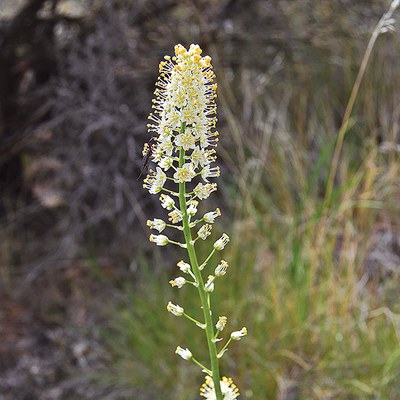
Foothill death camas is a spring flowering bulb. It has grasslike leaves and whitish flowers. All parts are poisonous.
Death camas is found in open grasslands with spring moisture or moist shrub-steppe communities, where the historic fire regimes were frequent and low severity. The top parts of the plant are often killed by fire, but the bulb generally survives. It is considered to regenerate rapidly after fire from its bulb (USDA, 1981 as cited in FEIS). Reproduction by seed after fire has not been documented. Because fire may open the forest or shrub canopy and reduce competition, death camas may increase after fire.
This blog post was written by Land Trust volunteer Pat Green! Thanks Pat!
Learn more:
- See the list of resources used for compiling this blog.
- Join the Land Trust for a guided wildflower walk or hike (April-August, each year)!
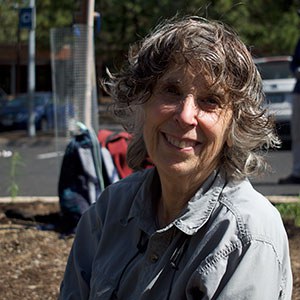
Pat Green worked for the US Forest Service from 1980-2010 as soil scientist and forest ecologist. She completed extensive work in forest soil mapping, classification and interpretation, as well as mapping and interpretation of slope stability hazards. She also concentrated on sampling and interpreting historic and current plant communities and disturbance regimes. In retirement, she has focused on volunteering for the Forest Service and the Land Trust to combat invasive species, including leading and pulling weeds as a Land Trust Weed Warrior. Pat also enjoys finding and documenting rare plants and gardening with native plants.