
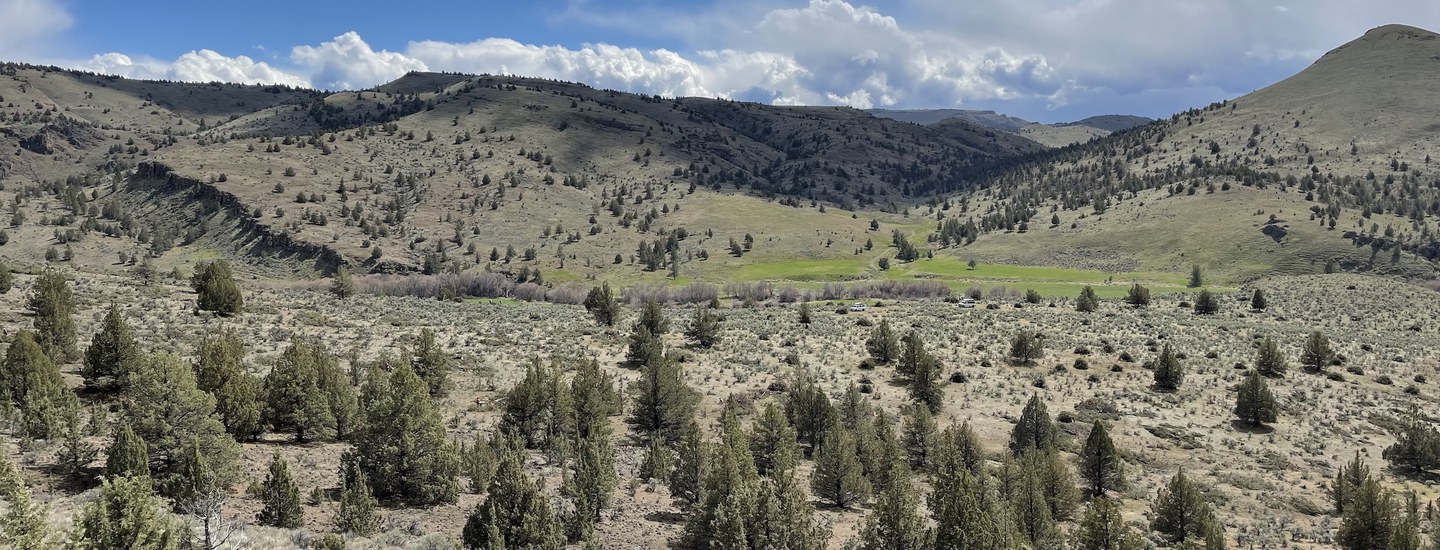
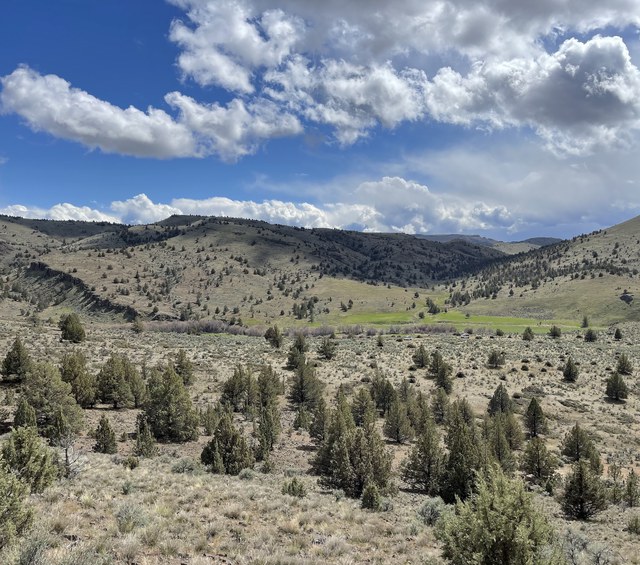
The Land Trust has been working to restore the juniper forests of Priday Ranch since we first protected the Preserve in 2020. Forest restoration efforts have been focused on thinning junipers to create a forest that is resilient to the impacts of climate change, provides healthy habitat for native plants and animals, and helps protect adjacent neighbors from catastrophic fire.
Why do the forests of Priday Ranch need restoration? Like many parts of Central Oregon, juniper trees at Priday Ranch grow in a greater abundance than they would have originally. Historically, junipers thrived in higher-elevation rocky soils that were challenging to other native plants, while saplings that took root in lower elevations would be limited by periodic low-intensity grass fires. Beginning in the 1870s, changes in land use and management, including grazing and fire suppression, depleted the native grasses that dominated Central Oregon, leaving room for junipers to flourish and grow in much greater abundance. Learn more about juniper.
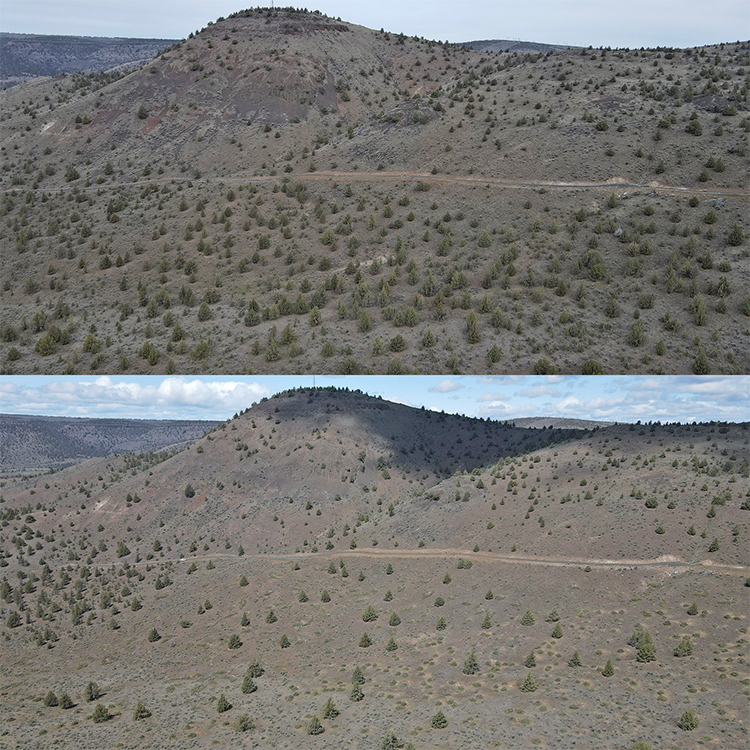
Today, the Land Trust is working to thin juniper stands at Priday Ranch, focusing on removing the majority of small diameter juniper, while leaving older trees and a mosaic of tree clusters as cover for deer and elk. Juniper thinning helps native grasses, shrubs, and wildflowers receive more sunlight and moisture, thereby improving diversity and vigor which in turn benefits wildlife. Finally, thinning also helps reduce fire danger, and, if a fire does occur, improves the land's ability to bounce back afterwards.
How does forest restoration help climate change? Forest restoration can help relieve trees from overcrowded, resource-limited conditions, so they’re better able to adjust to and survive various forms of natural disturbance (pests, fire, periods of drought, etc) that are becoming increasingly more frequent due to climate change. Did you know that healthy forests are also considered one of the best forms of natural carbon storage? Trees, and all plants actually, are magical! They make their own food through a process called photosynthesis that involves taking CO2 out of air to make the energy they need to survive. So, trees and forests help mitigate climate change by actively removing CO2 from the atmosphere!
Land Trust juniper restoration activities include forest thinning and pile burning. Major efforts include:
- 2022: The Land Trust thinned 250 acres of juniper at Priday Ranch.
- 2023: The Land trust thinned 245 acres of juniper. We also burned piles from 2022 thinning efforts. Learn more.
- 2024: The Land trust thinned 100 acres of juniper. We also burned piles from 2023 thinning efforts. Learn more.
- 2025: The Cram Fire burns Priday Ranch, including many acres of juniper. Learn more.
- 2026 and beyond: More juniper thinning is planned in the coming years at Priday Ranch. Stay tuned!
Learn more:
- About the Priday Ranch.
- About our approach to restoration.